Case study
StackPilot
Heroku’s own tools assume you are at a laptop, so a failed deploy or a crashed dyno waits until you get back to one. StackPilot puts fleet health, alerts and the fix on the phone in your pocket.
- Client
- In-house product
- Year
- 2025
- Platforms
- iOS, Android, web
- Our role
- Design and engineering
- Status
- Pre-launch, product page
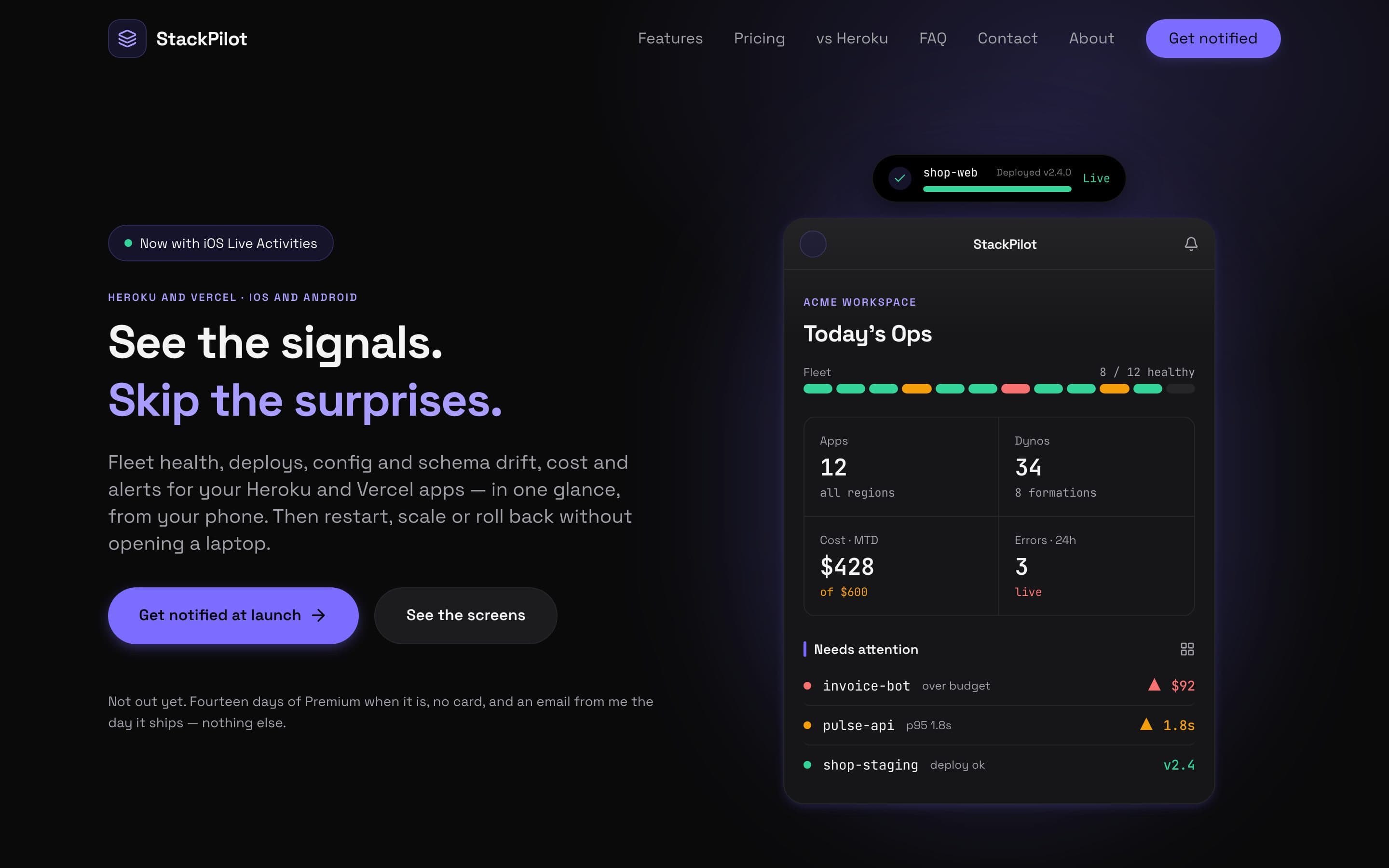
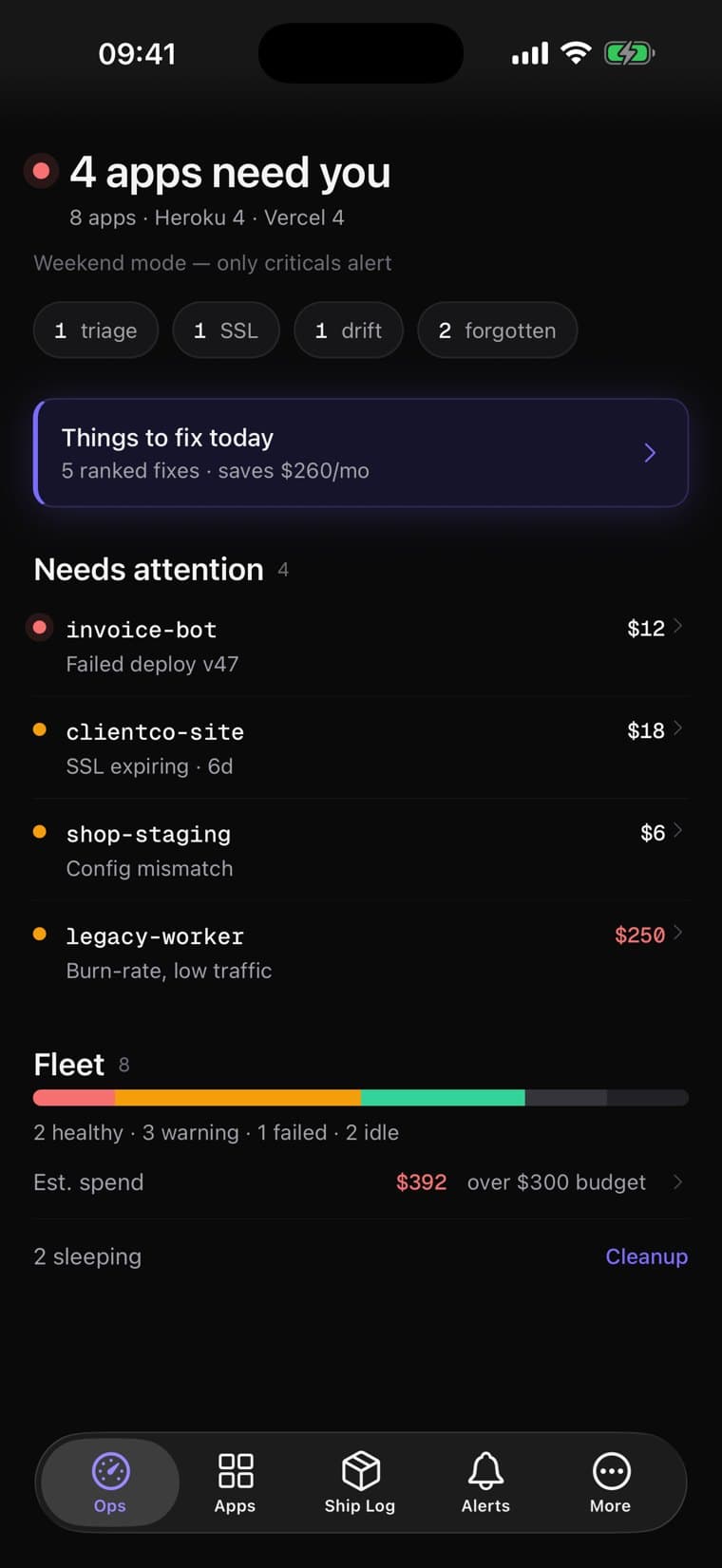
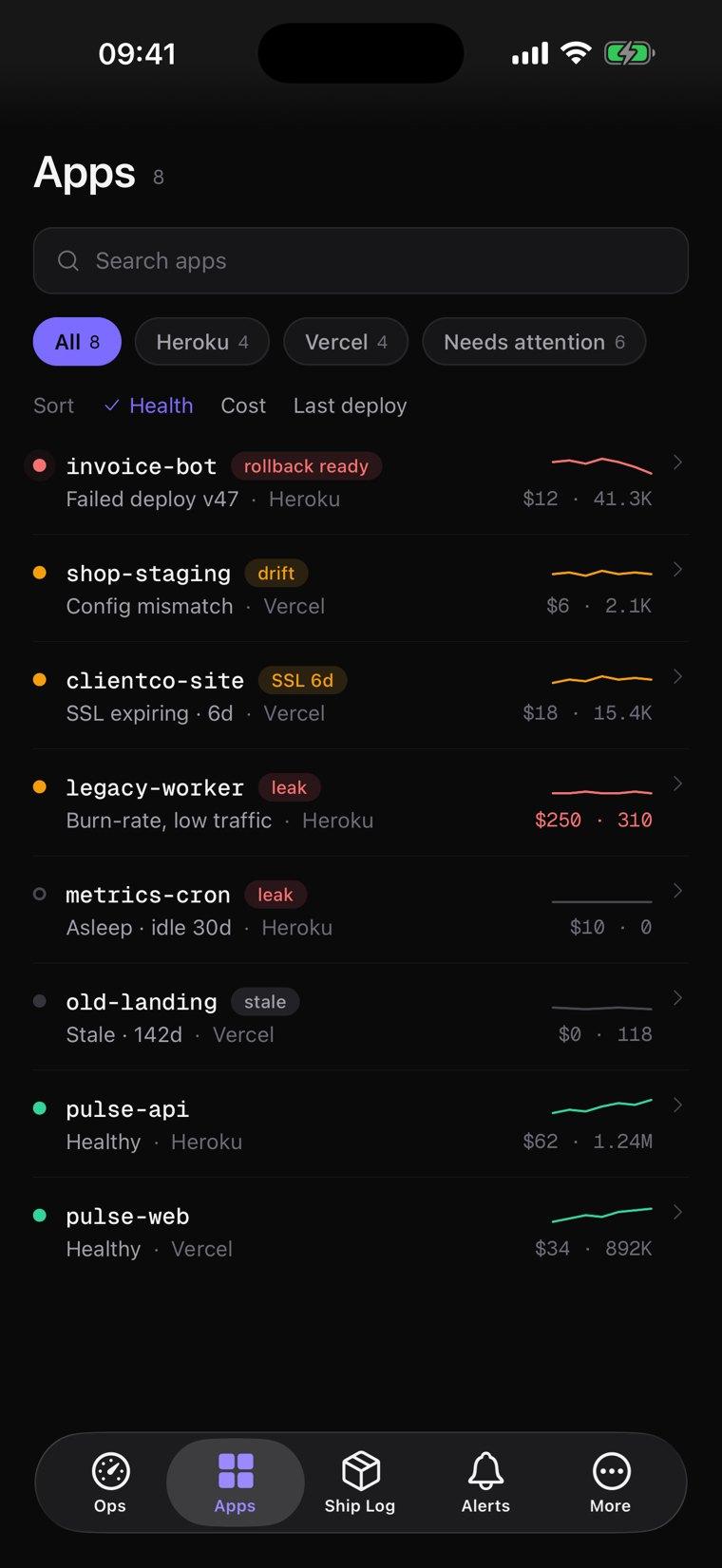
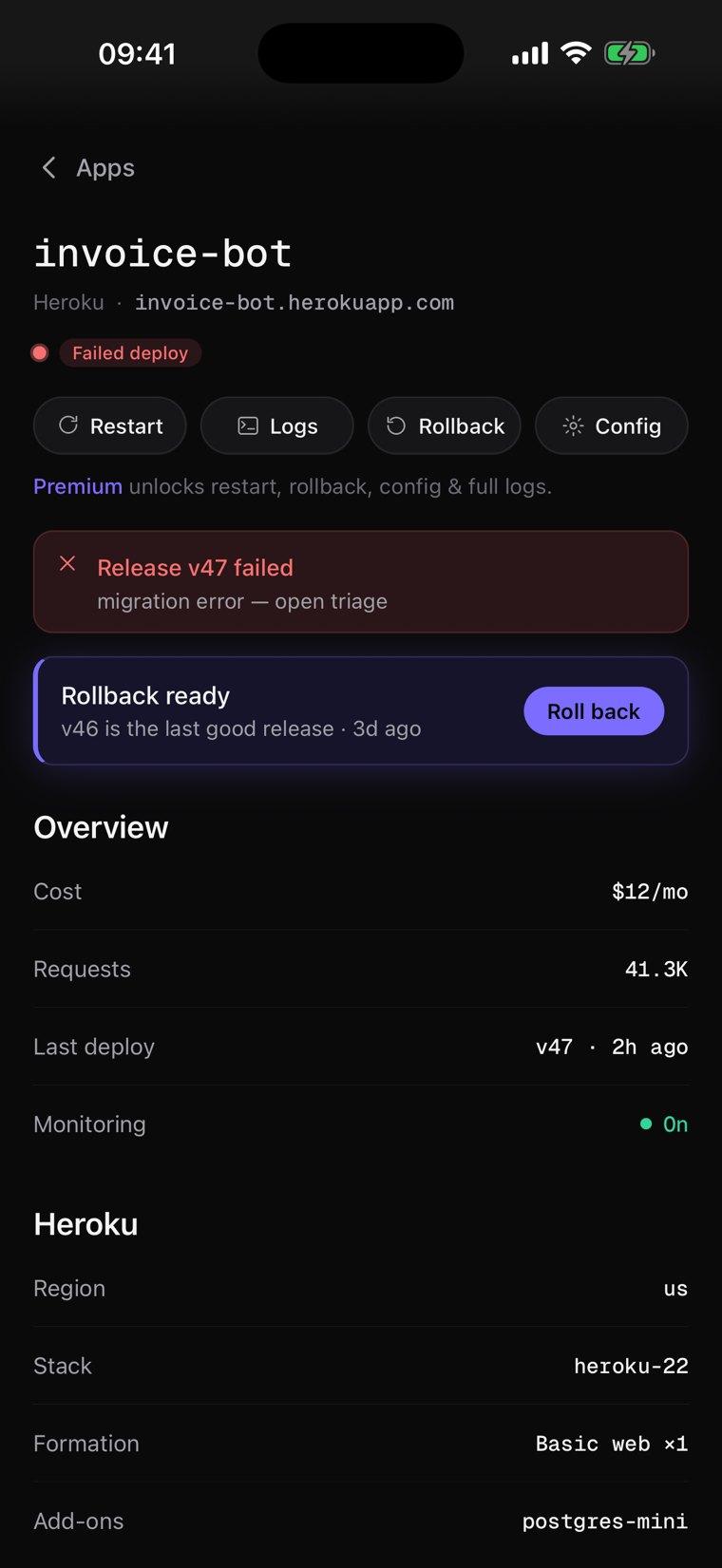
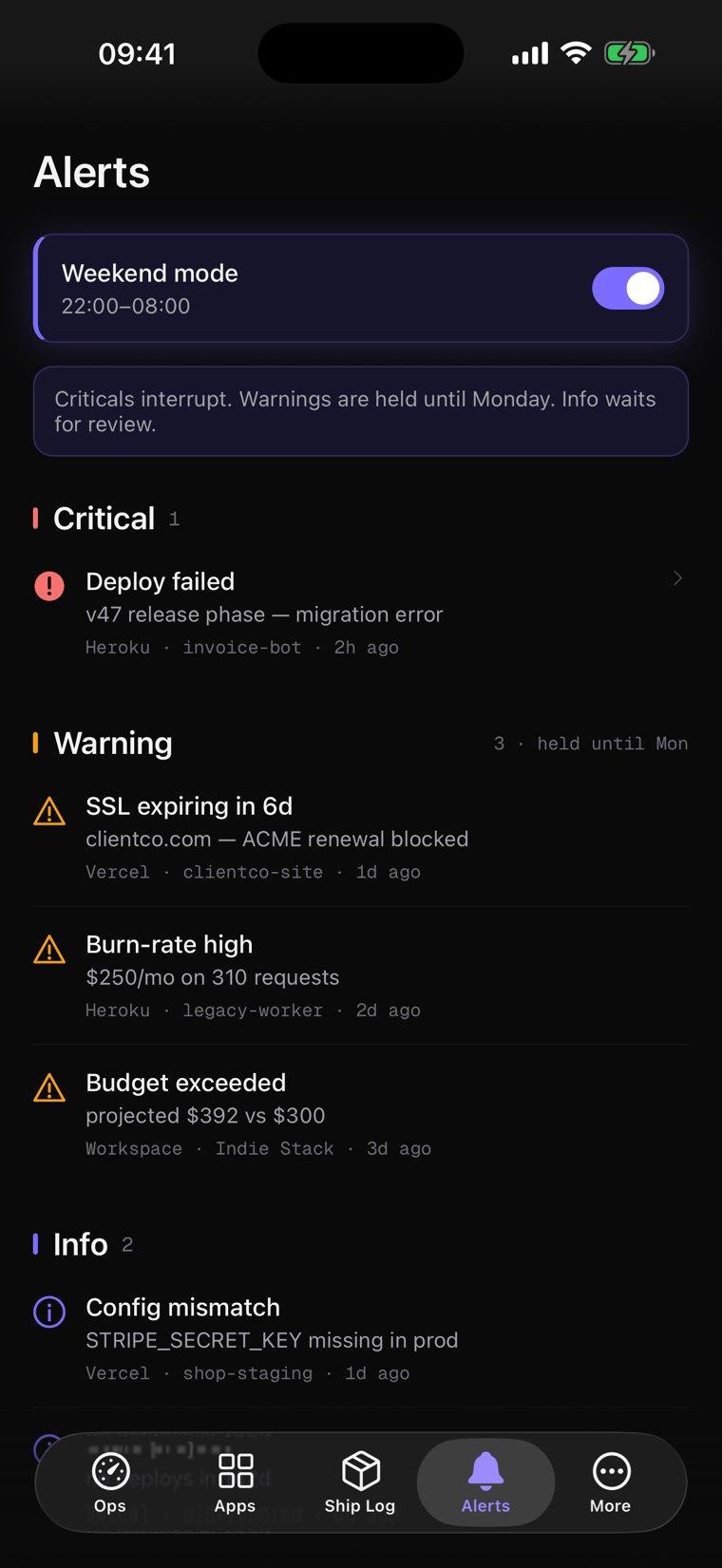
- Opens on the apps that need you, not on a list of everything.
- One row per app carries health, provider, spend and traffic, so the list doubles as a status board.
- Rollback sits beside the failed release and names the last good one.
- Weekend mode: criticals interrupt, warnings wait until Monday.
The problem
Heroku’s tooling is built for the desktop and the command line. When a dyno crashes, a deploy fails or an app starts throwing errors, you find out late and fix it later, because both need a laptop.
There was no good phone-native way to watch app health, get told the moment something changes, or restart a dyno from wherever you are.
What we built
A phone-first companion that talks to the Heroku Platform API: real-time status, push alerts when a dyno changes state, logs, and dyno control. The screens are organised around what needs attention now, not around the provider’s own menus.
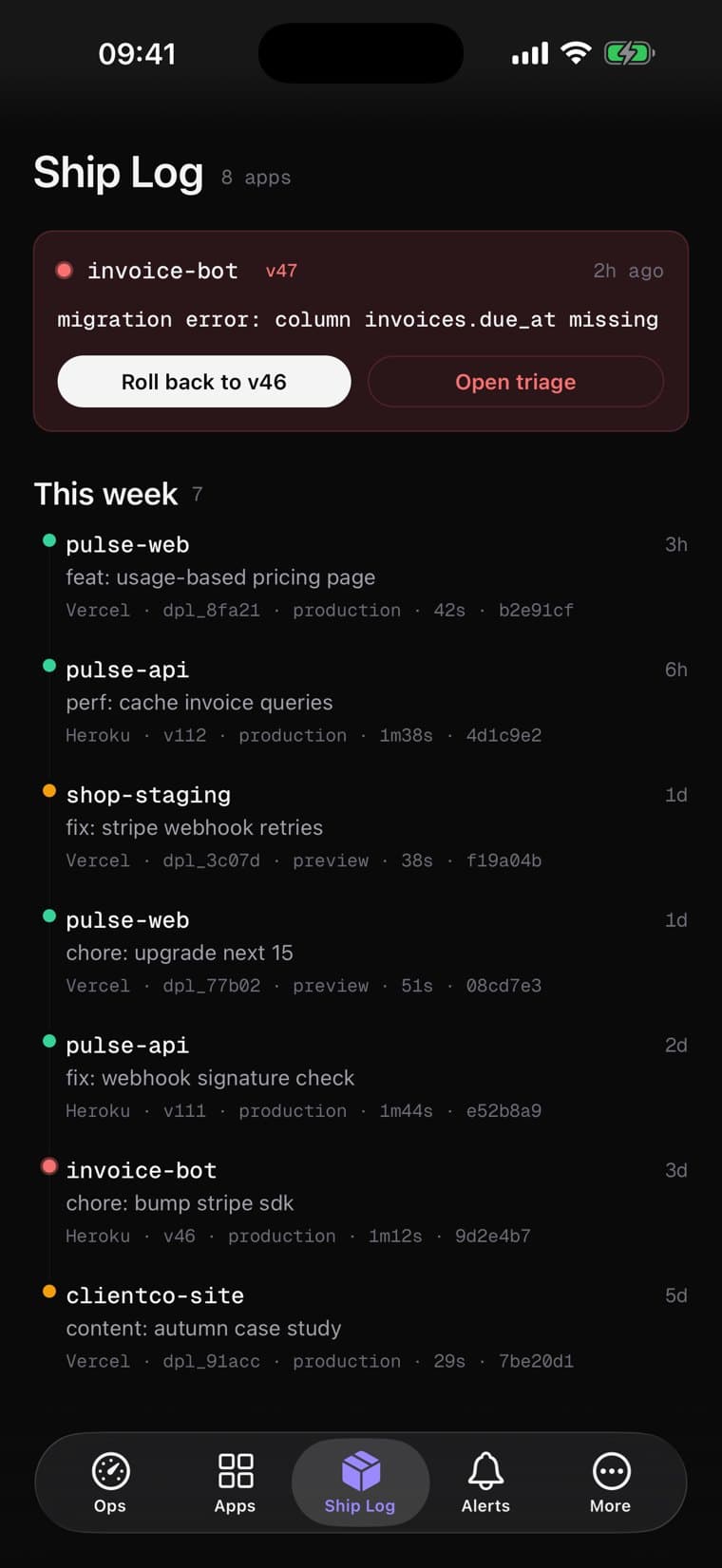
A failed release sits at the top of the log with its error and a one-tap rollback.
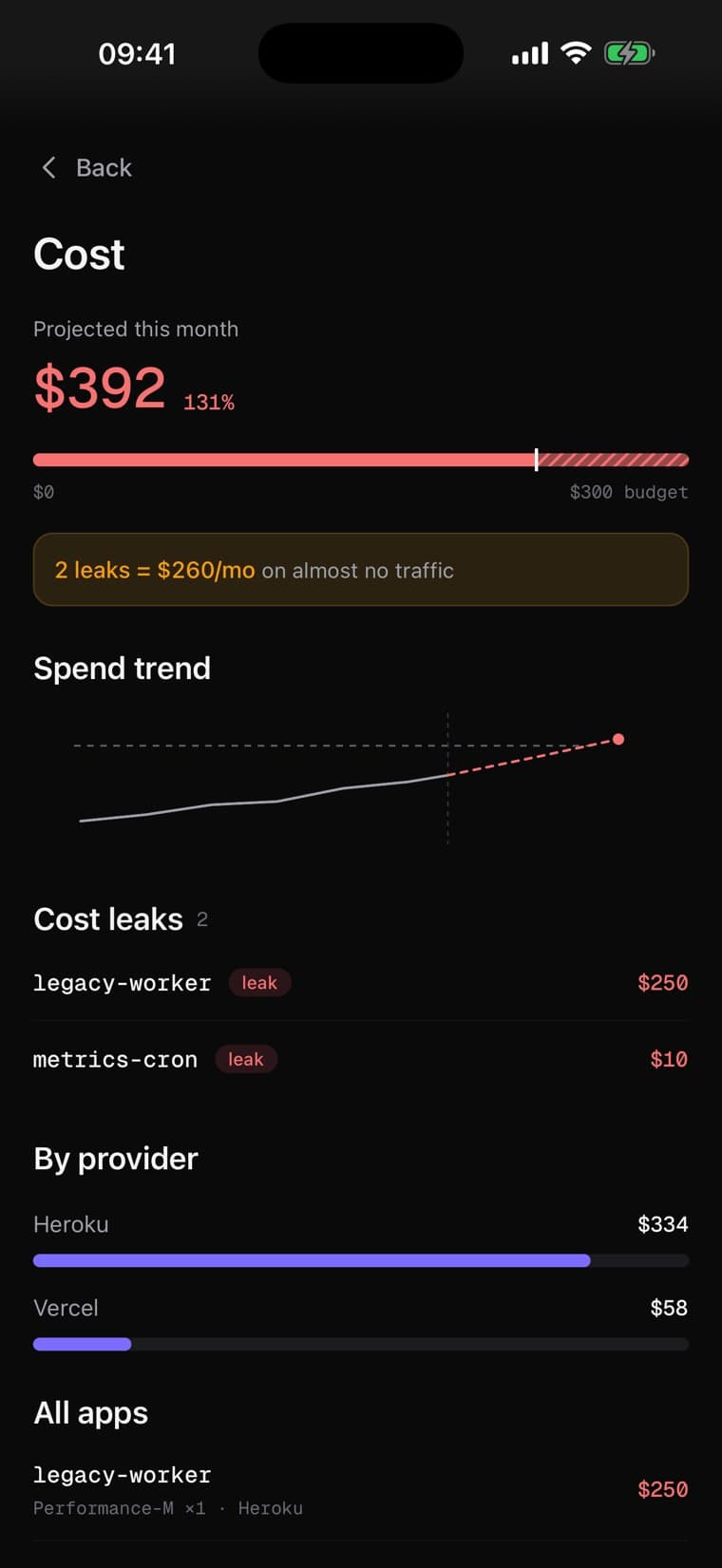
Spend is projected against the monthly budget. Apps that cost money on almost no traffic are flagged as leaks.
Results
StackPilot has not launched, so there are no usage numbers to report yet. They will appear here, with dates, after launch.
- Verified
- Against the running code on
Building something like this?
Or write to hello@802.software.
Start a project