Split & Pay: bill splitting from a photo of the receipt
Most bill splitters make every person create an account before a balance can settle, so one-off tabs never get settled. Split & Pay works from a shared link, and nobody needs an account to see what they owe.
- Client
- Founder-led product
- Year
- 2025
- Platforms
- iOS, web
- Our role
- Design and engineering
- Stack
- Expo, Next.js, TypeScript
- See it
- product page
The problem
Other splitting apps ask every participant to create an account, add friends and wait for the others to install before a balance settles.
Dinners, group trips and shared subscriptions are mostly one-off, so the people who would never install an app are exactly the ones the bill depends on.
What we built
Each bill gets a short room code and a public link. Anyone with the link sees the tab and claims their items, with no sign-up.
Settling is a status change tagged with how the money moved: Venmo, Zelle, Cash App or cash. Split & Pay records the payment and never handles the money itself.
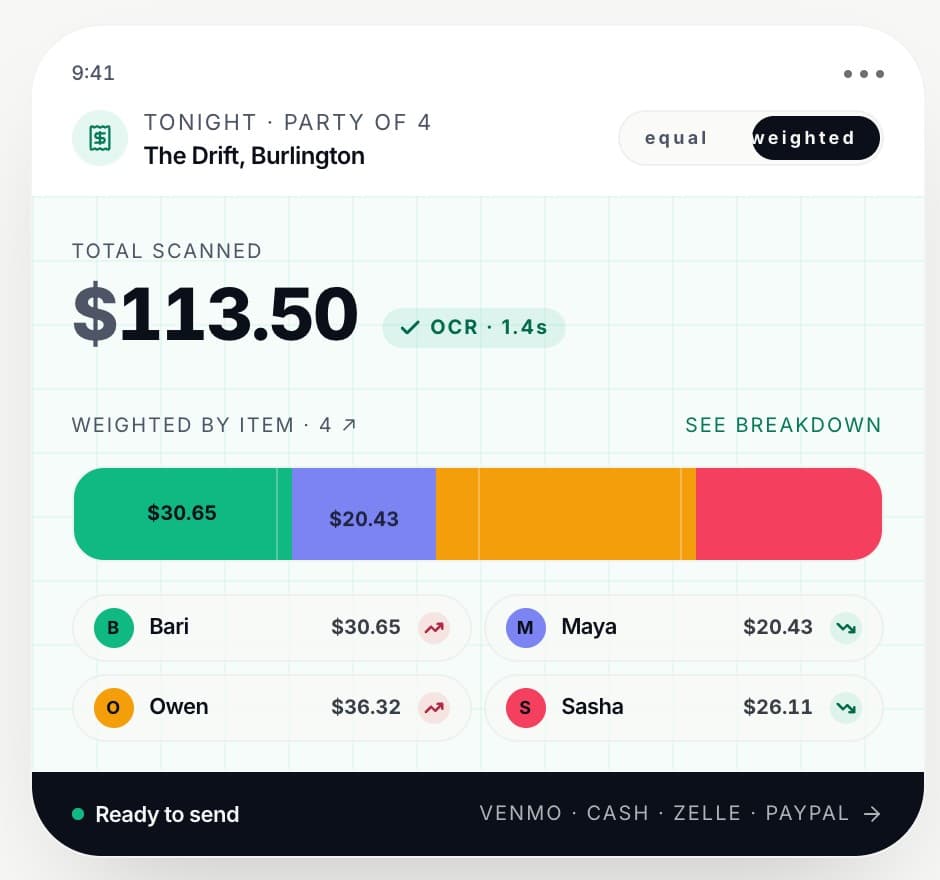
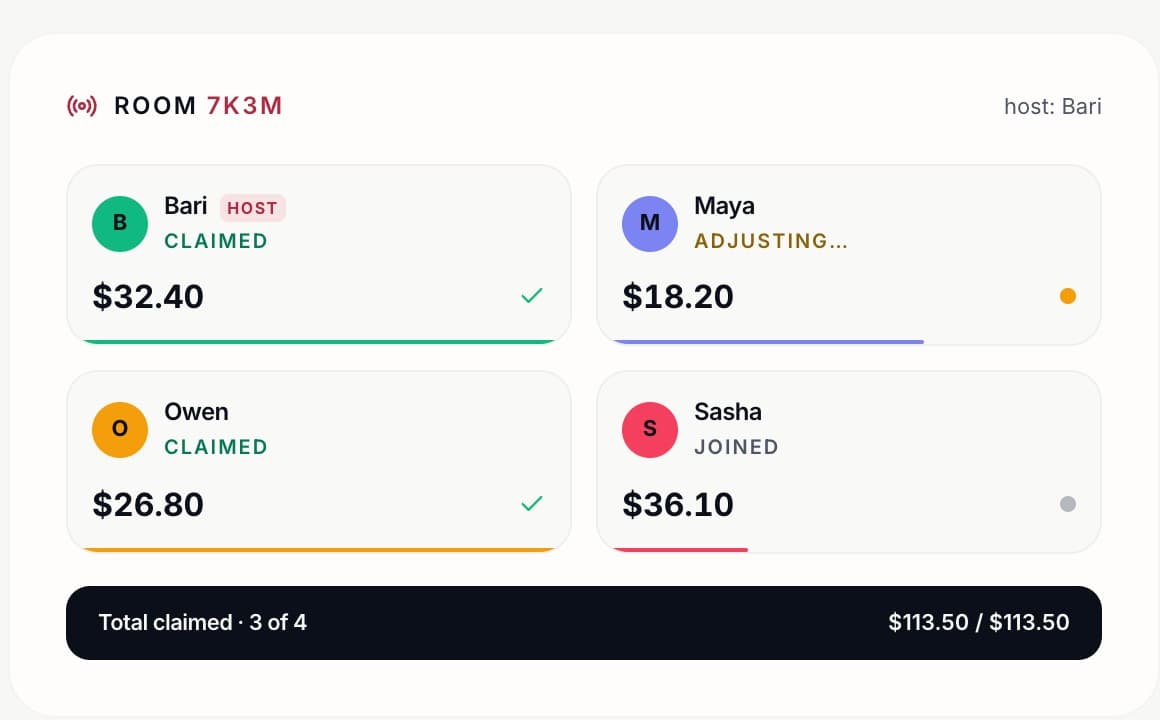
Everyone at the table claims their own items from their own phone.
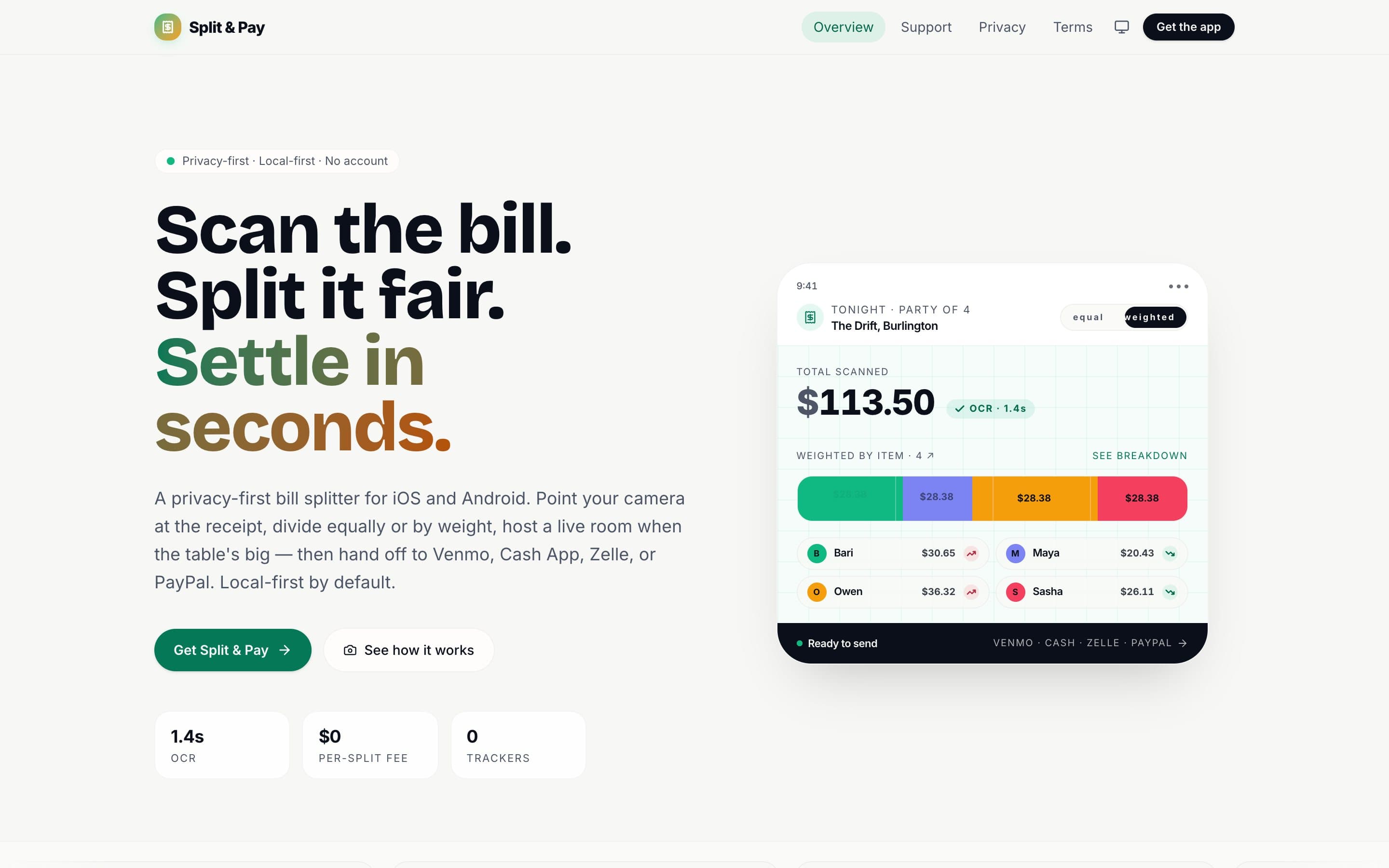
How it is built
The phone app and the public share pages share one product model. The web side is part of the same Next.js codebase as this site.
- Mobile
- React Native with Expo
- Web
- Next.js App Router with public share pages at /apps/splitnpay/r/[code] and a preview image for each room
- Settling
- Paid or pending, tagged with the payment method. Not a payment processor
- Safety
- The settle endpoint is rate-limited per IP and ignores replayed requests
Results
Nobody needs an account to view a tab, so everyone at the table stays in the flow.
Each shared link previews with the room’s own image, so people know what they are opening.
What is next
- Room creation with checked, random codes in place of the demo codes.
- More than one currency per room, with the exchange rate recorded at the time.
- A per-room limit on the settle endpoint in addition to the per-IP limit.
- Design and engineering
- 802.software
- Project lead
- Baris Taskiran
- Verified
- Against the running code on
Related service: Web applications and SaaS, Mobile apps for iPhone and Android